
Breaking down barriers to more affordable health care in Idaho
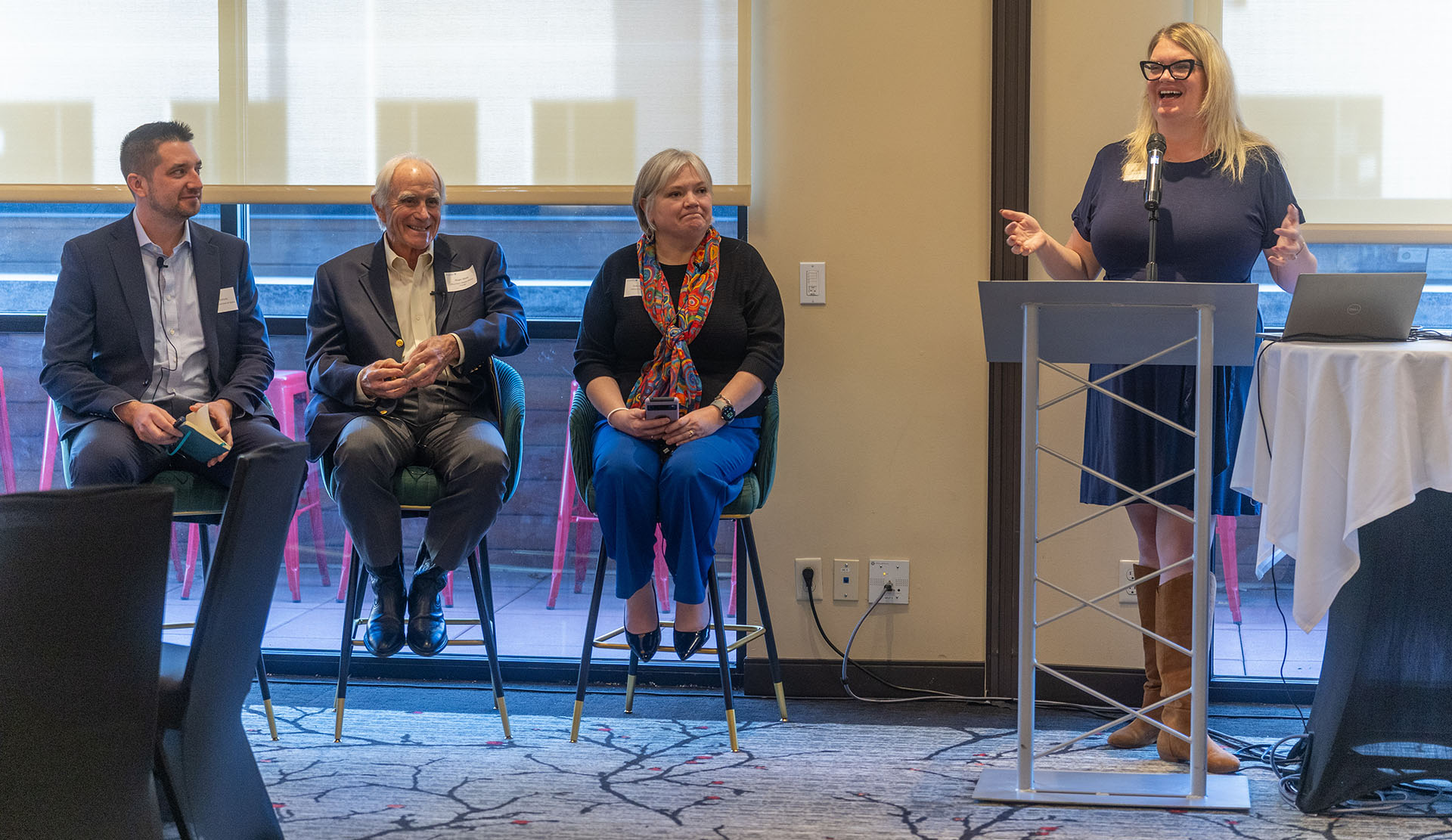
From left to right, panelists Orion Schultz, Dr. Roger Stark, Jodi Andersen and moderator Adrean Cavener share thoughts on the challenges and opportunities associated with improving health care affordability.
Health care costs are rising, and affordability is a key concern for Idaho’s families and businesses. For nearly 80 years, we’ve been committed to maximizing access to quality, cost-effective care for our members and hosted a forum to discuss solutions for more affordable health care. The event brought together panelists who offered diverse insights and perspectives:
- Jodi Andersen, director of Human Resources, Idaho Forest Group
- Dr. Roger Stark, policy fellow, Mountain States Policy Center
- Orion Schultz, director of product Go-to-Market, Regence BlueShield of Idaho
Idaho’s business climate and the employer struggle
Andersen described the lumber industry’s current landscape as tight and uncertain, where every cost increase – including health care – has a tangible impact. She emphasized that leaders are focused on staying competitive, controlling costs and retaining skilled workers, while employees are most concerned about health care, childcare and housing affordability. Rising health insurance premiums and deductibles are particularly discouraging, sometimes prompting employees to delay or skip care, which can lead to more serious health and financial problems down the line.
The drivers behind rising premiums
Schultz highlighted that insurance isn’t just for routine visits – it’s about protecting families from catastrophic financial loss. He shared that claims above $500,000 have skyrocketed, even as membership growth has remained modest. Hospital prices and prescription drug costs are the primary drivers of these increases, with hospitals now often seeking double-digit rate hikes and drug spending accounting for nearly a third of total costs. Schultz explained that health care mandates, while well intentioned, immediately raise premiums and can add complexity to employer plans, resulting in fewer choices and higher costs for employees.
The policy perspective and the path forward
Dr. Stark provided historical context, noting that the U.S. health care system’s unique evolution has led to its current challenges. He addressed issues like hospital markups on specialty drugs and the growing impact of federal programs that are designed to help patients, but have expanded in ways that can exacerbate costs. The panel agreed that mandates and provider-administered drug prices need careful scrutiny, with suggestions such as a mandate review board to evaluate new policy proposals.
Panelists concluded that collaboration among employers, policymakers and insurers is essential. Flexibility in benefit design and a focus on tackling root cost drivers, rather than just the symptoms, were highlighted as critical steps. As health benefits become as vital as wages, thoughtful, innovative solutions are needed to ensure more affordable care for Idaho’s workforce and families.