Health care affordability under siege: Why Oregon employers and families are paying the price and why Regence is fighting for them
The following is an opinion editorial written by Michael Cole, president of Regence BlueCross BlueShield of Oregon.
Oregonians work hard to afford health care. As a health plan serving this community for decades, our role is clear: Slow rising costs to ensure our neighbors can stay healthy. But right now, affordability—and therefore access—is under unprecedented threat.
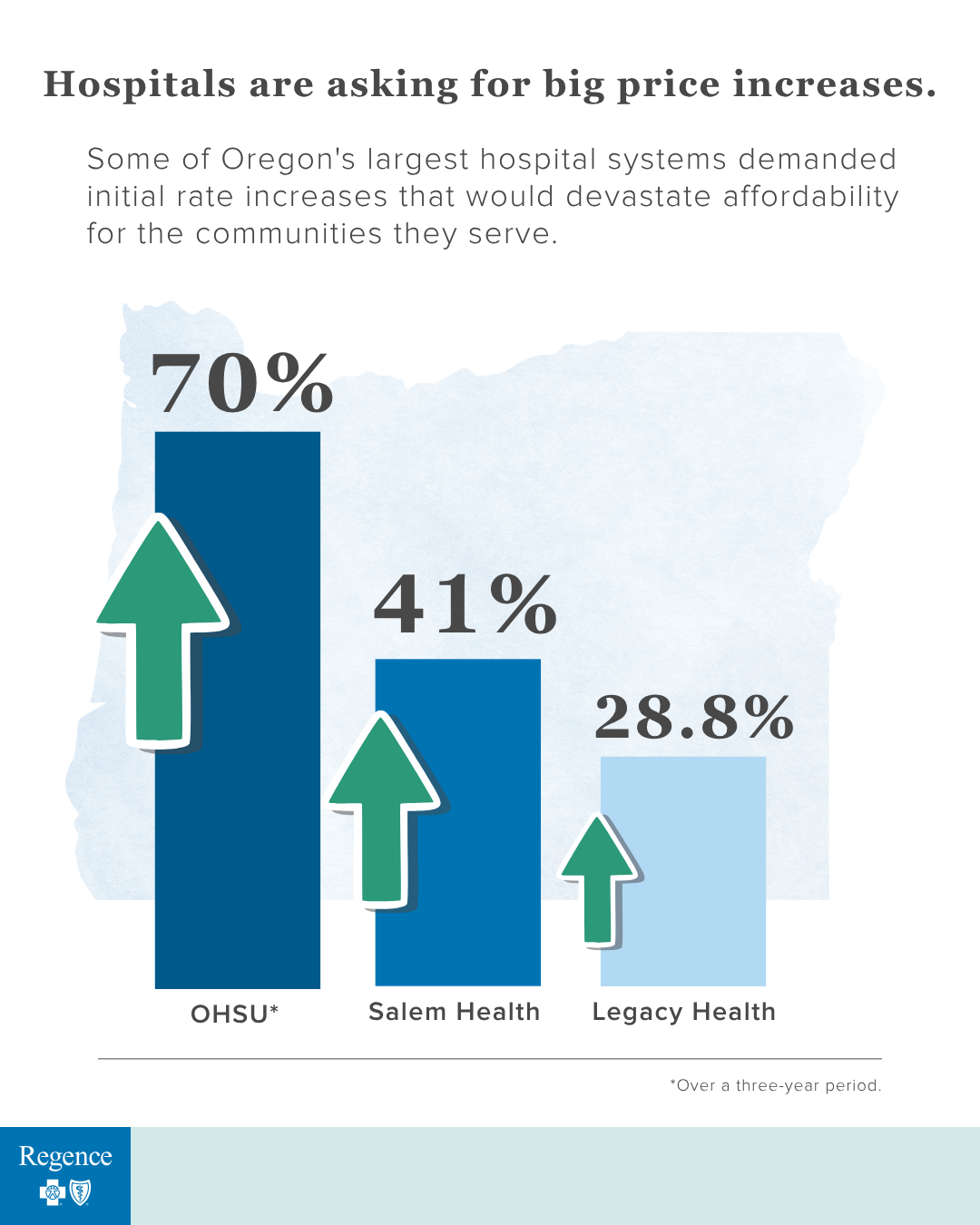
Some of Oregon’s largest hospital systems are demanding rate increases that would devastate affordability for the communities they serve. Salem Health initially demanded 41%. OHSU opened with more than 70% over three years. Legacy Health, which has terminated Regence effective today, wanted 28.8%. Granting just these increases would drive up insurance premiums as much as 40% – far beyond what inflation, wages or actual health care costs justify.
When hospitals demand such increases – disconnected from quality, health outcomes or the true cost of care – affordability collapses. When care isn’t affordable, it isn’t accessible, even for people with health insurance.
Medical costs in Oregon rose an average of 8% annually the past three years, driven by increases across outpatient surgery, mental health services, emergency care and prescription drugs. Pharmacy costs climbed even faster—averaging roughly 12% a year—fueled by specialty medications. This marks the third consecutive year of double-digit prescription drug cost growth.
These aren't abstract statistics. Every pricing decision flows directly to premiums, employer budgets and household finances. When provider prices rise faster than inflation and wages, families and businesses pay the difference.
The real drivers of rising costs
While health care has always been expensive, what we're seeing now is different. Price growth—not increased utilization or improved outcomes—has become the dominant cost driver. Some Oregon hospital facilities charge five to six times more than others for identical treatments, with no measurable difference in quality.
Consider cancer immunotherapy treatments: Across Oregon hospital systems and clinics, the allowed cost per case ranges from roughly $13,000 to $67,000—for the exact same medication administered the same way. This isn't about better care. It's about pricing power.
And consider how health systems are investing heavily in artificial intelligence—over $1.3 billion nationally in 2025—with much of it focused on revenue optimization rather than patient care. Early data suggests AI-assisted coding is generating hospital margins per admission from under 3% historically to more than 5.5%, not through better treatment but through more aggressive billing practices.
What Regence is doing
We can’t control what providers charge, but we can—and must—negotiate firmly on behalf of the people and businesses we serve. Negotiating isn't optional; it's how we prevent premiums from rising even faster.
We're working to bend the cost curve through improved care coordination, appropriate utilization management and directing services to the right care settings. We're standardizing reimbursement for identical medications and encouraging lower-cost biosimilar drugs with no clinically significant difference from brand-name counterparts.
But health plans alone can’t solve this. We need providers who share our commitment to affordability. Our members' financial well-being depends on it.
A call for balance
We support Oregon's health care providers and value their essential role in keeping our community healthy. But affordability must be part of the equation.
Oregonians deserve transparency about what's driving their health care costs. They deserve providers who recognize that unsustainable price increases ultimately harm the communities they serve. And they deserve a health care system where pricing reflects value, not market leverage.
As a local, not-for-profit health plan, Regence works for members, not shareholders. Ninety cents of every premium dollar goes directly to medical care. When costs rise, our members and employer customers simply pay more.
Affordability is about whether people can afford care, coverage and peace of mind. The biggest threat right now is unchecked provider price increases, and it's time we all ackowledged it.