Regence, Central Oregon leaders discuss healthcare’s impact on local economies
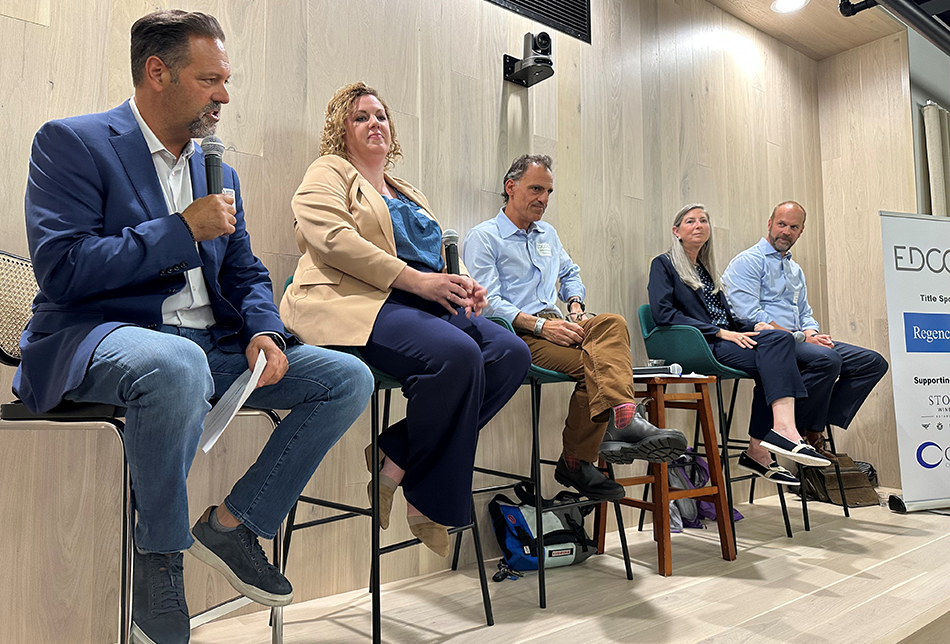
Regence partners with EDCO for panel discussion on healthcare’s impact of local economy. (Pictured left to right, Jon Stark, CEO, EDCO; Mary Anne Cooper, director of government affairs, Regence; Keith Thomajan, chief of staff, Hayden Homes; Dr. Tracy Muday, executive medical director, Regence; Matt Swafford, CFO, St. Charles)
What does it take to build a thriving community? Most people would likely point to jobs, housing and good schools. However, business leaders across Central Oregon are making a compelling case for another critical factor: access to quality healthcare.
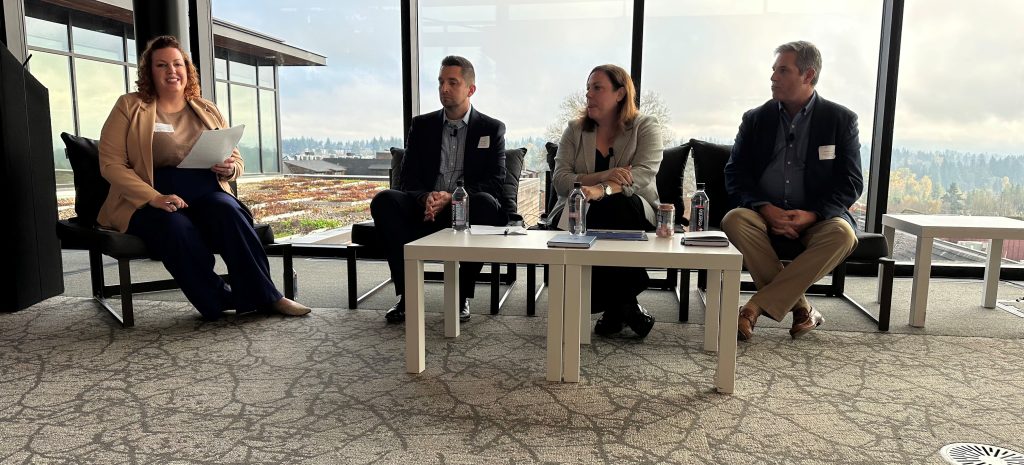
Regence, in partnership with Economic Development of Central Oregon (EDCO), hosted a panel discussion on July 22 featuring Mary Anne Cooper, director of government affairs at Regence; Keith Thomajan, chief of staff at Hayden Homes; Dr. Tracy Muday, executive medical director at Regence; and Matt Swoffard, chief financial officer at St. Charles Health.
Together, they explored the powerful relationship between employee well-being, healthcare access and economic prosperity, diving into some of the region’s most pressing challenges, including workforce shortages, rising benefit costs and the ways housing, education and social factors shape the health of a community.
“Healthcare is a critical factor when we make decisions about long-term investment in a region or state,” said Thomajan. “When a community demonstrates it has what employees need to live well, businesses take notice. They put down roots.”
The conversation also challenged a common assumption: that health is primarily determined by medical care. In reality, health extends beyond the walls of any clinic or hospital; social factors such as housing and education play a much larger role. Medical care accounts for only about 10-20% of a population’s health outcomes, with 80-90% dependent on a combination of behaviors, social circumstances including education, economic opportunity and environment.
“The conditions of someone’s everyday life are the single greatest driver of their health,” said Dr. Muday. “Addressing the health of a community isn’t just the work of doctors and nurses. It’s the work of employers, educators, local policymakers, neighbors and every organization that have a stake in the people who live and work here.”
Panelists agreed collaboration isn’t just a strategy: it’s the foundation of a healthy community. When employers, health systems, insurers, policymakers and community voices come together around a shared vision, no one entity has to carry the weight alone.