What “The Pitt” says about mental health of ER workers and complexities of US healthcare

The HBO Max medical drama “The Pitt” wrapped its second season last month and has been renewed for a third season that will debut in early 2027. Each season of the show chronicles a day in the emergency department of a fictional hospital in Pittsburgh.
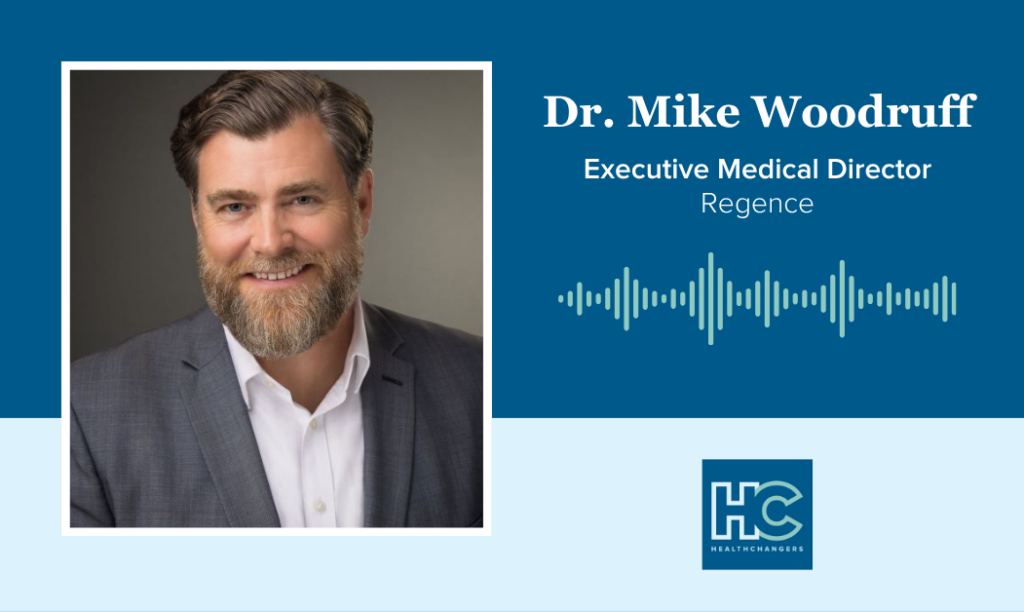
On this episode of HealthChangers, host Ashley Bach speaks with Dr. Daniel Meltzer and Dr. Mike Woodruff. Besides their roles as executive medical directors at Regence, they’re also board-certified emergency medicine physicians.
As part of Mental Health Month in May, we discuss what the show says about the mental health challenges of working in an emergency room. We also talk about how “The Pitt” depicts a complex and sometimes frustrating U.S. healthcare system.
This is the second of a two-part conversation with Dr. Meltzer and Dr. Woodruff about “The Pitt.” You can find Part 1 here.
Listen to the full podcast episode on the player above. Below are some highlights, which have been edited for length and clarity.
AB: In our first conversation about “the Pitt,” we touched briefly on mental health, and I want to dig deeper. The medical professionals on the show – many of them are struggling through the extreme stress of the job. And yet, I was really struck by how many of the characters are loathe to talk about their struggles when colleagues ask. Maybe there’s a little bit of a culture of “I’m going to sort of bury this for now and treat it later.” Does that ring true to you guys, and do you think that increased awareness of mental health has maybe helped the issue?
MW: It really rings true to me. In med school, at least in my generation, we were given a master class in how to turn off your emotions and how to bury your traumatic experiences and not address them. It started on day one in the anatomy lab, when we pulled back the sheet on our cadavers; and for many of us, it was the first time we had seen a deceased person – a human body without life. And we all looked around to see who was reacting, and nobody was reacting. There was no emotion displayed in that room. And so, I think, what I hope is that the current generations going through medical training, are actually getting better support and more knowledge about how crucial it is to lean into that idea that you’re subject to a fair amount of emotional trauma, even physical trauma, unfortunately, working in an emergency department and that that needs to be cared for. That’s my hope.
DM: It’s very real. I like to say emergency medicine, we’re part of the most burned-out specialty in the most burned-out profession. And there’s a reason for it. And I think you can see that on the show, there are not lunch breaks, there are not, you know, meetings with coffee. It’s very, very, very challenging. And then there’s this notion of the double victim, particularly in medicine, which is that you’re, quote, a victim (i.e. it’s not great to not feel well), and then you’re sort of blamed and shamed for not feeling well. So, you’re sort of damned if you do, and damned if you don’t. If you disclose it, there’s the fear of repercussions. “I’m going to not be able to work, I’m going to lose my license, I’m not gonna be able to credential then.” So, you’re often carrying this burden unnecessarily.
I think, to Mike’s point, it’s gotten better. Sadly, it took the suicide of a very beloved physician named Lorna Breen, and there’s now a Lorna Breen Heroes Foundation, which is dedicated to the well-being of health workers, particularly the mental health well-being. And it took her suicide [in 2020] and a rallying entity around her to call this out. So, I think it’s better, but I still think the stigma of “suck it up” is far too pervasive.
AB: I was struck by a scene in Season 1 of “The Pitt,” where a character says, “The emergency department is a tough place for sensitive people, but we need them badly.” Just that idea of the “suck it up” culture permeates and yet, sensitivity is exactly what is needed in the ER. There’s a physician on the show, Dr. Mohan, who is a little slower with patients. She takes much longer with them than she’s supposed to, and yet, she’s also treating them very well. How do you balance your own well-being, working in the emergency room, while still showing that empathy?
DM: It’s such a good line [on the show]. It’s so well written. I think the paradox is that, we go into medicine to serve a noble and humanistic aim. And the process of training, as Mike articulated, often tries to erase that from you. And in so doing, you actually rob yourself of the intrinsic motivation of why you went into this, which is to connect with other people and to help them. And so, if you’re able to retain that empathy, and you’re able to retain enough vulnerability that you can connect, that’s the secret sauce. Those are the best days where someone may actually say, “thank you.”
And I will literally never forget the first day a patient said “thank you” to me. It was my third year of residency. And I remember walking down the hall and a guy said, “thanks, doc.” And I turned around and I was like, I didn’t know that he was actually talking to me, and he was out for a run and had what we call FOOSH (Fall on an Outstretched Hand), and broke his wrist, and I reduced it and splinted it.
And so I think, to Mike’s really good point earlier, if we can retain that humanity and connection, it really allows us to find the meaning in what we do. And it’s still hard, right? So you have to go home and all of a sudden you’re a parent, or you’re a spouse, or you’re a soccer coach, and you’ve got to live your life, and that balance is very tricky.
MW: I think early in my career, I thought I was being empathetic. I was trying to help. But I don’t think I understood empathy completely. And I think later in my career, as I got older, I realized that empathy can actually be the path to well-being; and not judging, but rather just sitting and letting myself and my desires for the outcomes, my beliefs of what’s right and wrong to kind of float away; and then trying to understand where the person is coming from and what health might look like for them, what getting better might look like for them, what reassurance might look like for them.
And I’ll never forget, one of the later patients I saw in my career, I actually just put down the clipboard and put my feet up and listened for about 30 minutes to this woman who just needed me to listen. And in the end, she stopped talking, and I said, “Well, what do you need?” And she said, “I think I’m good. I think I’m going to go home.” (laughs) And it was literally just having me there to listen. And it took me, I don’t know, 15 years of practice, to get to the point where I felt like that was an actual valid intervention and a healing tool in my toolbox.
AB: That is awesome. So on the show, you can see the signs of strain as the doctors and nurses care for patients in a system that really feels at the breaking point. There are huge, long waits, there are patients waiting seven hours outside in the waiting room. The hospital administrator complains to the attending physician that patient satisfaction scores are too low. That’s a big theme in Season 1. And they’re taking too long to treat each patient. The ER’s equipment isn’t quite modern enough, and there aren’t enough staff to cover all the patients. What are your takeaways from the show about the current state of healthcare?
DM: I think complexity is the word that comes to mind for me, how hard it is to care for people at scale who have different personal needs, different emotional needs, different economic abilities, different social networks, different perceptions of acuity in a system that is chronically understaffed. The clinician capacity issue is very real with varying degrees of medical literacy.
There’s sort of the age-old joke in healthcare: “quality, access and affordability, pick two.” And we’re always trying to do all three simultaneously, because we know that’s the sweet spot. And yet, I think what it shows is the tension between what transpires in the emergency department is not scalable economically. It’s just too expensive and too resource intense and too personally intense.
So, how do we scale all those needs over time, and how, as a health plan, do we educate people and provide resources and partner with clinicians and design sustainable systems so that the whole system is working together – whether it’s employers or individuals or our physician partners in a way that ultimately can manage this?
AB: One thing that struck me in “The Pitt” were all the levels of doctors who are working together in the ER on the show. You have the medical students. You see their expertise vary depending on what year they are in in medical school. Then there are the residents, and then finally, the attending physicians, like played by Noah Wyle, who are managing all the doctors under them. How do you manage all those levels of experience in an emergency room, especially when it’s just such a hectic environment?
DM: There’s a great story, I can’t remember where it comes from, but there was someone walking around a hospital and found someone who was mopping the floors and the person that was walking around the hospital said, “Well, what do you do here?” And [the man mopping the floors] says, “Well, I help patients. You know, I’m saving lives.” And I think it’s that notion that everyone has a role, and everyone has skin in the game, and I think keeps everyone better.
Now, that hierarchy [in an emergency department], just like at work, can be an asset or it can be a liability. And I think where the challenge comes is if there’s not psychological safety. And one thing I think that you see in “The Pitt” pretty well is that everyone can say, “I don’t understand,” or “I have a different idea.” And so, the ability to both delegate, listen and defer and empower, I think, is a really important part of that environment. And it’s not just between the physicians, between the physicians and the nurses and the respiratory therapists and the medics. Everyone has a role. It’s, believe it or not, a relatively well orchestrated dynamic.
AB: “The Pitt” was just renewed for a third season. Are you going to keep watching?
DM: Depends on if you’re going to interview me about it (laughs). I think at this point, I’m in. I may try to watch it earlier in the day, because it does make it hard to sleep sometimes, but it’s compelling. I don’t know that I’ll be binging it. Probably need to pace myself.
MW: I’m in as well. I want to see where it goes. And more than that, I just want to support this endeavor of showing this important part of our society and our healthcare system. And, man, it’s just, I think, the world of the people that created this show, and the actors that are just doing this phenomenal job of knowing this really complex medical knowledge and showing it on screen; they’re learning and memorizing and acting in these most amazing ways. So I just want to support those people. They’re doing amazing stuff.