Dougy Center creates safe space for kids to help each other navigate grief
Grief, and especially grief among children, can be hard to talk about. But that's exactly why the Dougy Center for Grieving Children & Families was founded more than 40 years ago. To date, the Portland nonprofit organization has helped more than 60,000 children, teens, young adults and their families who are grieving, and the center is not just a national, but an international, authority on grief.
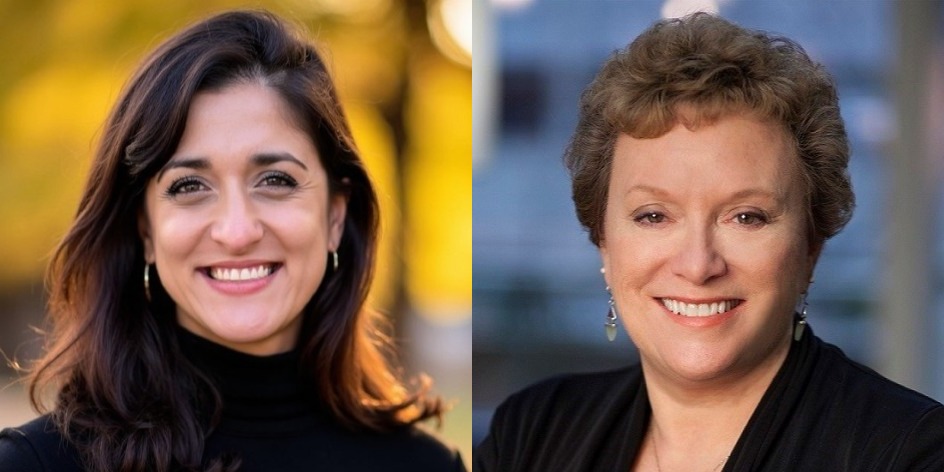
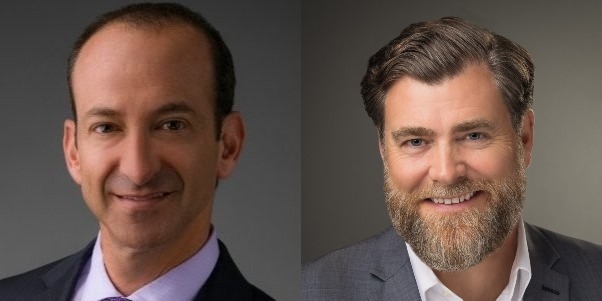
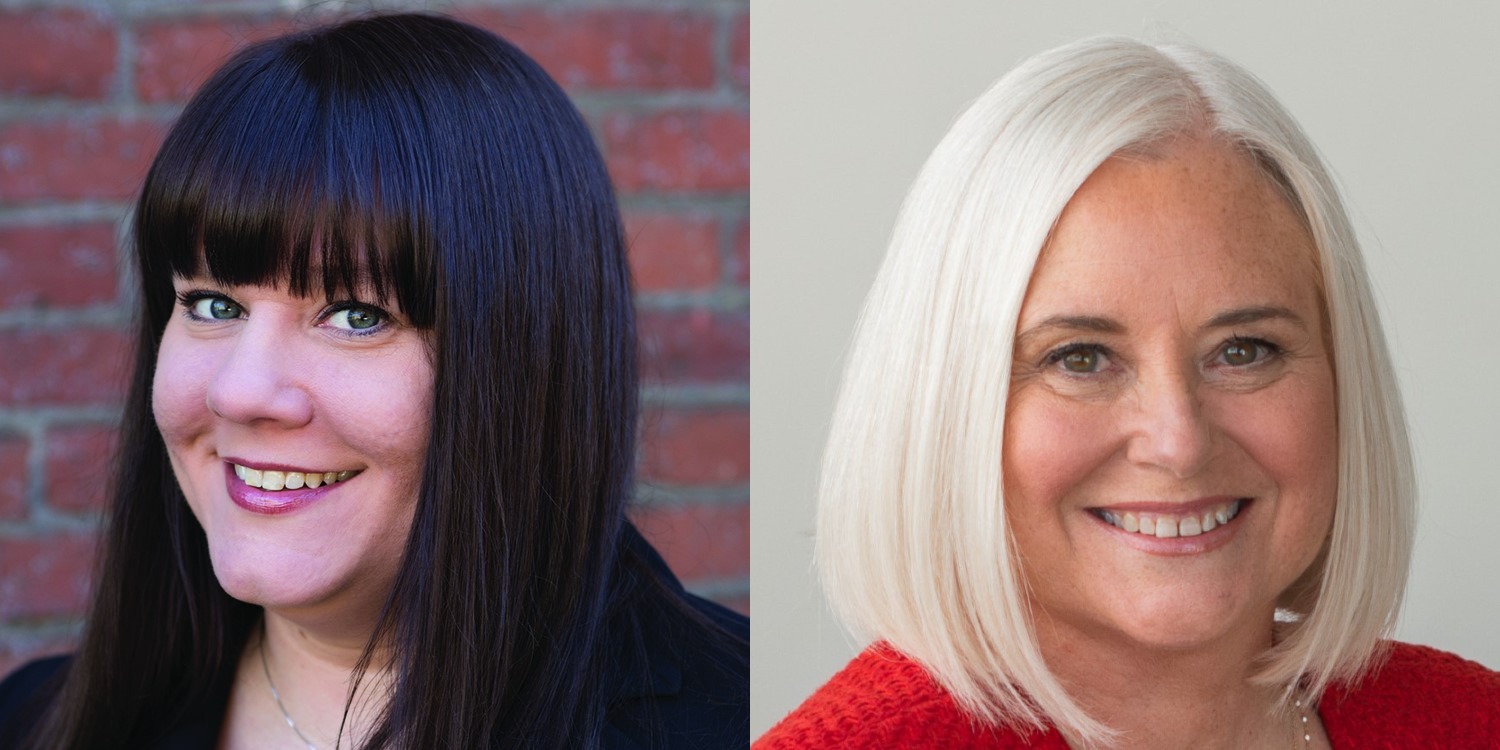
On this episode of HealthChangers, host Ashley Bach spoke with Brennan Wood, executive director of the Dougy Center, and Peggy Maguire, president of Regence’s corporate foundation, Cambia Health Foundation, about how Dougy Center supports so many grieving families around the world and why the Cambia Health Foundation has been a longtime supporter of the group.
Listen to the full podcast episode on the player above. Below are some highlights, which have been edited for length and clarity.
AB: Brennan, how was the Dougy Center founded? It would seem that the way we spoke about grief in the 1980s was probably very different than the way that we talk about it today.
BW: In some ways, yes, and in some ways, no. We've come a long way, and we still have a long way to go. But Dougy Center was founded in 1982 by a nurse, Bev Chappell. She was actually not nursing at the time but was really interested in end-of-life care and taking some courses from [renowned psychiatrist and end-of-life expert] Elisabeth Kubler-Ross. Elisabeth had been connected to a little boy named Dougy Turno, who was coming to Oregon Health & Science University (OHSU) for treatment for an inoperable brain tumor. And Dougy reached out to Elisabeth because of her work in end of life. She was the author of a book and really a pioneer in the hospice movement in America. And he reached out to her to ask her questions from his perspective on what it means to die.
So, when Dougy came to Portland, Bev got to meet him, and what Bev saw in Dougy was this thirst for knowledge and wanting to talk about what he was going through with other people who understood. And it made a lot of the adults around him fairly uncomfortable; but he really found that the other kids who were going through a same experience, they offered comfort and guidance to one another. And Bev saw that and really recognized that oftentimes when kids are going through hard things, that being with other kids going through similar circumstances is perhaps a better solution than adults explaining things to kids. And so, she started Dougy Center in the family room of her home, and it has grown.
Today we serve 2,700 individuals a year in our peer grief support groups, we provide resources and trainings worldwide, and there's such a need. In the United States, the most recent statistic is 1 in 11 kids will have a parent or a sibling die before they turn 18. And kids really need support when hard things happen, and they need to know that they're not alone and that grief is a natural, normal and healthy response to loss.
AB: Brennan, I’m really struck that the initial inspiration for the Dougy Center was from a child himself who was facing serious illness.
BW: I think kids are far more aware than we give them credit for. I think kids know when hard things are happening. And I think often as adults, we want to shield kids from hard things, but really, you can't do that. And so, when I see kids at Dougy Center coming together in these just wonderful, powerful ways, it isn't shocking to me that kids sometimes lead in ways that adults might not recognize or realize until they see kids doing incredible things.
AB: Peggy, Regence first started working with the Dougy Center more than 25 years ago. And the Dougy Center was one of the first nonprofit partners of the Cambia Health Foundation when it was founded in 2007. Why did we first decide to get involved with the Dougy Center?
PM: The simple answer is that we were inspired by their mission. I think, as a culture, we tend to deny that death is a part of life, and that makes it awfully difficult for a child who is facing the reality of the death of a parent or a sibling. Grief can be very lonely and incredibly isolating, especially for a child who might not know who they can talk to about their experience. And we know that loneliness and social isolation have severe health consequences for all people – and that includes children.
That's really where the Dougy Center comes in. Their model of children helping children process their experiences alongside people who understand what they're going through is incredibly powerful.
The Cambia Health Foundation has a deep history in funding palliative care across the United States, and we've learned from that work that when a patient is diagnosed with a serious illness or experiences a life-limiting injury, that has ripple effects for the entire family. So, it's really important to think of person-centered and family-oriented care, and that's what the Dougy Center provides. It's really providing a critical resource for our community and beyond by serving children, teens and families in a holistic way.
AB: When you think about the Cambia Health Foundation and its current focus, what resonates with you about Dougy Center's mission?
PM: At the Cambia Health Foundation, we look to partner with organizations that support whole-person health. As I said, palliative care is about whole-person health for people with serious illness. Now, we're building upon that expertise to support whole-person health for resilient children and families, for healthy and connected aging, and we're trying to build a health care workforce that focuses on the whole person.
We know that 80 percent of our health is determined not by what happens in the doctor's office, but what happens in our lives. We call these social drivers of health: access to healthy food, stable housing and strong social connection. These are contributors to whole-person health. It's really the integration of our physical health, our social needs and the behavioral aspects. We aren't diseased body parts. We are whole people and what happens in our lives contributes to our health and wellbeing over the course of our lifetime.
One of our program areas at the Cambia Health Foundation is resilient children and families, and there, we look to invest in programs and services that help children to build resilience and to overcome difficult childhood experiences by focusing on their needs. The Dougy Center is helping to build resilient children and families by connecting children with other children who understand their experience and their situation, by allowing them to process their experiences. We really love the model because it provides safe space for children to process their emotion, to build connection, ultimately creating more resiliency and a pathway to lifelong health and wellbeing.
AB: Brennan, it's really incredible how much the Dougy Center's peer support model resonates. Could you walk me through some of your peer support groups today and some of the feedback and the results that you've seen?
BW: At Dougy Center, we provide peer support groups to children and families who are grieving before and after a death. And we start at age three. We go up to age 18 for our teen groups, and for all of those groups, we provide support to the adult family member who brings the child, oftentimes a surviving parent, but sometimes that's another family member as well. And kids are grouped together based on their age and who died, and often even how they died, to give kids that opportunity to normalize what they've experienced in their family. They're run by a Dougy Center staff person who has at least a master's level education in a social service field. But the majority of the people, the adults surrounding these kids, are volunteers.
We run 84 support groups a month, twice a month, and kids really get the opportunity to provide support to one another, because they're ongoing. Kids can stay in the program as long as they need to be here. And kids who've been here longer often provide support to kids who maybe haven't been here as long.
One of the stories that I share often because it really touches my heart is an example of how kids support one another. I hear sometimes like, oh, well, how can a three-year-old support another three- year-old and one example was a three-year-old boy came in and he, like every child at Dougy Center, gets the chance to share their story every time they come: their name, their age, who died and how they died, so that they can share more of that story over time, perhaps share different parts of that story and get comfortable with that story.
And a three-year-old boy, it was his first time, and he shared that his dad had died, and he said, you know, my daddy died, and I want him to come back. And he burst into tears. And a 4-year-old boy from across the room said to this little boy, “Well, when daddies die, they don't come back.” And this little boy said, “But my daddy died, and I want him to come back.” And he was crying, and the 4-year-old stood up, walked across the room, sat next to the 3-year-old, put his arm around him, and said, “I know my daddy died, too; but when daddes die, they don't come back.” And what I love about that story is that, you know, if an adult had said that to that 3-year-old boy, it almost sounds scolding, but instead, a peer was able to offer that insight to this 3-year-old and sit there with him, and both of them could have that experience and provide support to one another.
And what that really does, ultimately, is Dougy Center is a preventative model. It's a preventative program, and we use connection and story and different opportunities for play and expression through art and music and theater and all sorts of ways that kids and families can really express what they're going through in their own way, at their own time. And ultimately, what the Dougy Center model does is helps us to avoid negative outcomes for kids and families and ultimately for our communities and our world.
One of the things that I often share is, it's OK to be angry. Grief is not a singular emotion or a singular experience. There are so many emotions in grief, and it is OK to be angry, but it's not OK to punch your little brother, right? So how do we help kids have big emotions and big experiences and big responses that are natural and normal and healthy, but give them safe outlets to express what they're going through. Get that out of their body, get it out of their mind, be able to talk about things – that builds long-term resiliency. It’s a word we've said a lot here, but it's really true, because kids need community. They need trusting adults who are there to create safety for them to share their experiences and their stories.
AB: Peggy, you mentioned earlier that part of the Cambia Health Foundation strategy specifically supports building resiliency in children. Can you share how that work intersects with the Dougy Center's peer support model?
PM: First, I want to say Brennan, I love the story of the 3- and 4-year-old boys that you shared, because you know the act of one boy getting up, walking across the room and putting his arm around and sitting next to the other boy like, “I've got you. You're safe here.” Just that physical act was a really beautiful story.
At the Cambia Health Foundation, we look to address and build resiliency in children and families by identifying and mitigating adverse childhood experiences, which are traumatic events that happen to someone before the age of 17. I think the death of a parent or a sibling has to be one of the most traumatic childhood experiences that anyone can have, and there is really a strong link between children who have adverse childhood experiences and the increased risk of developing serial illness later on, such as obesity, heart disease, alcoholism, drug use and depression, or mental health issues as adults. Early intervention and gaining positive experiences, like the sense of belonging and kinship that comes from the Dougy Center’s peer support groups, those really buffer the impact of adverse childhood experiences.
It's really, really important to step in to prevent, if you can, and then mitigate the impact of these adverse childhood experience factors to support the long-term health and wellbeing of a child and ultimately an adult. I could say it until the cows come home, but at the Cambia Health Foundation, we are so honored to support the Dougy Center's innovative, compassionate peer support group model, and Brennan, your leadership.
AB: Brennan, besides your work with children and families in the Portland area, the Dougy Center is a national and international authority on grief. You have one of the most popular podcasts on grief, called Grief Out Loud. You've trained more than 500 programs worldwide on the Dougy Center model, and you even partnered with Sesame Street on grief resources for children. What is next?
BW: Our headquarters are in Southeast Portland. We have a small satellite location in Canby, and we have a partnership in Beaverton, on the west side of the metro area. So our goal is to really serve the entire Portland metro region. It has been a longtime dream of ours to expand to the west side of the city of Portland to meet the overwhelming demand. We will be able to share more about what we're working on in that regard soon.
Really our focus and our mission is serving as many kids as possible in a supportive and safe space to really mitigate, as Peggy said, the health outcomes that we want to avoid and also to provide kids a safe and healthy outlet for their loss and grief, which, again, is just this natural, normal, healthy human thing.