Regence, Sempre Health partner to make prescription drugs more affordable and effective
The cost of prescription drugs is one of the primary drivers of the rising cost of healthcare. But many people may not know that medication adherence also plays a significant role.
About half of Americans don’t take their medications as prescribed. They don’t take the drugs often enough, or they stop taking the medication before treatment is completed. For some people, this is forgetfulness, but for many others, it’s because of cost. The drugs are just too expensive.
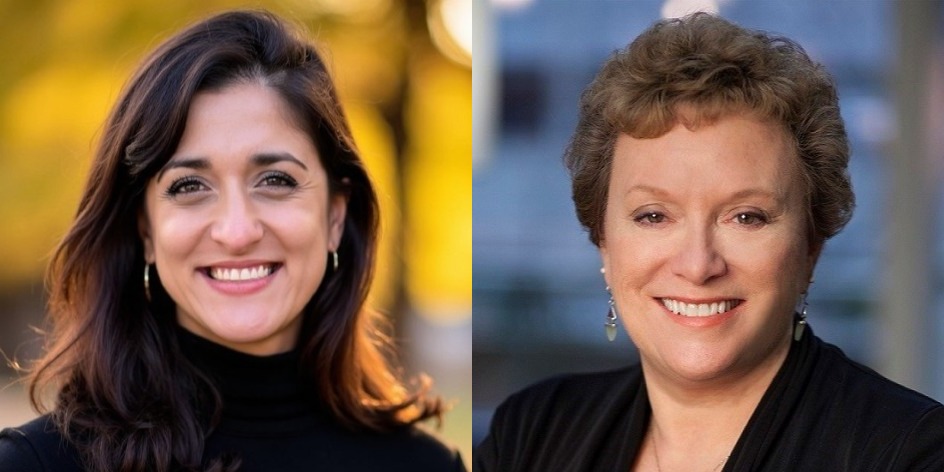
On this episode of HealthChangers, host Ashley Bach speaks with Anurati Mathur, co-founder and CEO of Sempre Health, and Dr. Shirley Reitz, director of clinical pharmacy sales and client services at Regence, about how Sempre and Regence are working together to keep Regence members healthy by making it easier for them to fill their prescriptions on time.
Listen to the full podcast episode on the player above. Below are some highlights, which have been edited for length and clarity.
AB: Anurati, why is medication adherence such a big issue?
AM: We know there are many health issues and conditions that can be completely controlled or treated with medication. People can go on to live very long, fruitful lives, hardly feeling the impact of a disease that they may have. And yet a medication only works if a person takes it. So in spite of us having some of the world’s best therapies in this country and living at a time with some of the best [drug] molecules out there, access gaps can make it really difficult for us to realize the benefits of that science.
And when people don’t take their medications as prescribed, they can suffer very real complications or worsening health. This can be tied to more frequent hospitalizations, more frequent use of clinical care, and higher risks of death.
From an economics perspective, this is pretty costly to the U.S. healthcare system. One study from the New England Healthcare Institute showed that poor medication adherence costs the U.S. healthcare system nearly $500 billion a year. As folks get sicker, this increases the cost of care. And you know, this isn’t a monolithic issue. There are many complex reasons a patient might be non-adherent. So it’s hardly a simple problem to solve, but certainly one that’s worth solving.
AB: Shirley, why is cost such a big factor in why people don’t take their medication as prescribed?
SR: Two of the biggest drivers in the overall cost of healthcare are, number one, hospital costs, and second is prescription medications. We know that many families are finding it increasingly difficult to really afford the cost of medications that they need to stay healthy.
On the prescription medication side, much of that increase is coming from what we call high-cost specialty drugs. Now it’s important to remember these drugs can be life-changing or in some cases life-saving for the patients who need them. But drug companies charge much more for these drugs in the U.S. than in other countries.
According to a survey that came out earlier this year from KFF, which is a leading health survey organization, about one in five adults, or 21 percent, say that they have not filled a prescription because of the cost, while a similar share, about 23 percent, say they have instead opted for over-the-counter alternatives.
And in that same survey, about one in seven adults say that they have cut pills in half or even skipped doses of medication in the last year, again, because of the cost.
AB: Anurati, how does Sempre Health improve medication affordability and adherence?
AM: Sempre is an affordability solution at our core. We allow payers like Regence to distribute dollars to their members to offset the cost of life-saving medications. Typically, we’re working with heart medications, diabetes medications, and respiratory, so asthma or COPD (chronic obstructive pulmonary disease).
With our programs, you pay less when you’re on time to fill, slightly more when you’re late to fill, and those discounts grow over time as you remain adherent. We’ve combined the principles of behavioral economics with the ease of text messaging to drive consistent medication access for patients in all 50 states. We have a 95 net promoter score. This indicates that patients really appreciate our programs, and we get to hear in their own words what these discounts mean to them. We are consistently unlocking dollars that they can use for other healthcare expenses, rent, childcare, heating, gas, groceries. And this really has a compounding effect for a person and their community’s health as well.
AB: What is the average discount across all of your clients?
AM: The company has been around for 10 years now, so we have a fair amount of data, even longitudinally to look at. Our average discount is around $40 per fill, and those savings can increase over time as patients remain on track and remain adherent to their medications. One thing we found is that relatively small discounts can still drive major improvements in medication adherence. For our patients, every one of these dollars matter. Our programs show that participants can go on to save on average 40 to 60 percent of their out-of-pocket costs on prescriptions each year.
AB: You hear $40 per fill and depending on where you are on income level, that could seem like a drop of the bucket, or it could be really major and really add up in people’s lives.
AM: It really adds up. I’m not exaggerating when I say we get thousands and thousands of texts from the patients that we work with. We have helped patients on fixed incomes. We have worked with patients through the pandemic where they faced a fair amount of financial insecurity and job loss. We’ve now heard from patients through times of inflation.
We’re honored with plans like you to stand beside these patients at the times where when they need us the most. And we know that this has a ripple effect on not just the specific individuals we work with, but also their families and the communities around them.
AB: Shirley, how are Sempre and Regence working together, and why did we decide to partner?
SR: We are really excited that we’re working with Sempre Health as of this year for our Regence commercial members. It’s important to note that right now they have to be members who are not on a health savings account (HSA) health plan. And at this time, members of fully insured employer groups in Oregon cannot participate, due to Oregon regulatory rules.
So now that we have all that out of the way, let me just talk about the program and the benefits. We have seen the success of Sempre with other Blue health plans. So for example, Sempre’s partnership with Blue Cross Blue Shield of North Carolina, which was launched in 2022, has saved millions of dollars for the health plan’s members and supported tens of thousands of prescription fills.
First and foremost, we want our members to be healthy, we want them to be taking their medications as prescribed and to live their healthiest lives. We don’t want them ending up in the emergency room or in the hospital.
These discounts are available for members through the Sempre program. It will cover important drugs for many of our members with chronic conditions. The medications for chronic conditions are high cost, so the discounts are even more important. And adherence is really critical for efficacy and to keep people healthy.
In many cases, our Regence members will need to be on these drugs for the rest of their lives to manage their chronic conditions, like diabetes, heart disease or asthma. So they need a path that is affordable and accessible and will facilitate their ability to take these medications long-term.
If you’re an eligible Regence member, you may have already received an invite about joining the prescription savings program by Sempre Health. Members will be invited to participate in that program after their employer group completes their annual renewal. And I would urge you to follow those instructions to go ahead, sign up, and get started.
AB: Anurati, your platform is incentivizing patients to do something that would seem to be in their best interest, and yet in healthcare, those kind of incentives often don’t work. Why is the Sempre model so successful?
AM: I think it actually comes down to three main areas that we are very focused on. Stakeholder alignment, real dollars, and then ease of use.
We’ve found a way to align many, if not most, of the major stakeholders in the healthcare system around ensuring these medications are accessible and affordable. When you have your health plan, the manufacturer of the medication, your employer, and us as a company all working toward the same mission of making these medications accessible, very powerful impacts result.
The second piece is real dollars. We’re not talking about patients earning points. There’s nothing gamified here. These are real dollars that can then be put back into patients’ pockets and back into their home to spend on other real-life expenses.
And then finally, ease of use. From a technology perspective, we’re very focused on meeting patients where they’re at. We know that 30 percent of members that we invite to our program end up enrolling. They never have to touch a mobile app. They never have to download anything. There are no accounts or passwords. We’ve made it very simple to access this program through text messaging alone.
And texting is so ubiquitous. There are some statistics out there, that 90 percent of text messages are read within the first 30 seconds. When it comes to meeting patients who may not have a smartphone or who may not be that technologically fluent, we are very focused on that from a product perspective, which is part of what contributes to how effective this is.